
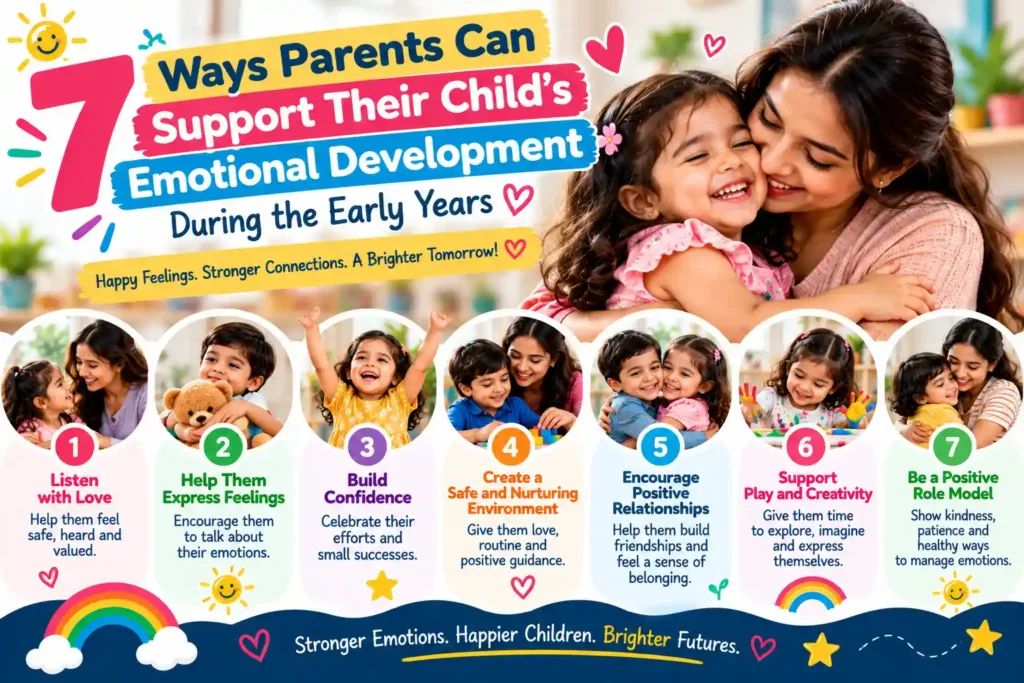
7 Ways Parents Can Support Their Child’s Emotional Development During the Early Years
A toddler who melts down because the banana broke in half is not being dramatic. To them, the world has genuinely gone wrong, and they don’t yet have the words or the brain wiring to cope. Emotional development is the slow process of learning to name feelings, manage them, and connect with other people, and parents are the most important teachers in that process. Here are seven practical ways to support it.
1. Respond Warmly and Consistently
Babies and young children learn that the world is safe when adults respond to their cries and smiles. The Harvard Center on the Developing Child describes this back-and-forth, known as “serve and return,” as a foundation for healthy brain development. You can’t spoil a young child with comfort. Each calm response builds trust that helps them handle bigger feelings later.
2. Name Feelings Out Loud
Children can’t manage what they can’t label. Say things like “You look frustrated because the tower fell” or “You seem so excited!” Over time, these words become tools your child can use. Zero to Three offers helpful guidance on understanding and supporting young children’s emotions, and the Child Mind Institute shares practical ideas for talking with children about feelings.
3. Stay Calm During Big Emotions
Tantrums are a normal part of early childhood. When your child is overwhelmed, your calm presence matters more than clever words. Get down to their level, keep your voice low, and wait for the storm to pass before talking it through. The American Academy of Pediatrics provides helpful advice on handling toddler tantrums and behaviour.
4. Keep Predictable Routines
Knowing what comes next helps children feel secure. Regular mealtimes, bedtimes, and goodbye rituals reduce anxiety and the number of daily battles. Routines don’t need to be rigid, but a steady rhythm gives young children a sense of control over their day.
5. Model the Behaviour You Want to See
Children watch everything. When you say, “I’m feeling annoyed, so I’m going to take a deep breath,” you show them a healthy way to handle emotion. Apologising when you lose your temper also teaches that mistakes can be repaired. The CDC highlights positive parenting and strong relationships as important parts of healthy development.
6. Make Time for Play and Connection
Play is how young children process the world. Pretend play lets them act out worries, and a few minutes of undivided attention each day does wonders for their sense of being valued. The National Association for the Education of Young Children explains why play is central to social and emotional learning. Put the phone away, follow your child’s lead, and enjoy the moment.
7. Partner With a Nursery That Values Emotional Growth
Children spend many hours in early years settings, so the people there matter. A nursery in Dubai that prioritises warm relationships, calm routines, and social learning reinforces what you’re doing at home. Look for teachers who comfort children, talk through conflicts, and share updates with parents. A best nursery in Dubai will treat emotional wellbeing as seriously as early reading and maths. You can see how social and emotional skills are built into the day in CircleTime’s curriculum.
Why This Matters Long-Term
Strong emotional skills help children make friends, handle disappointment, and focus in class. The UK’s Early Years Foundation Stage names personal, social, and emotional development as a prime area of learning, and the World Health Organization emphasises nurturing care as essential in the early years. The OECD and UNICEF have also pointed to the long-term benefits of strong early social and emotional foundations.
Choosing the Right Setting
In Dubai, the Knowledge and Human Development Authority (KHDA) provides information on early years providers, which is a good first step when comparing options. For more everyday ideas, Edutopia is a useful read. When visiting a nursery in Dubai, ask how staff comfort upset children, how they handle conflict between peers, and how they communicate with families.
A Note for Tired Parents
You will not get this right every time, and you don’t need to. What matters is returning to connection after rough moments. Small, repeated acts of warmth add up.
Final Thoughts
Supporting a child’s emotional development is a daily practice, not a one-off project. With patient parenting and a nurturing setting, children learn to understand themselves and others. Choosing a best nursery in Dubai as your partner can make the journey smoother for everyone. To ask how emotional wellbeing is supported day to day, reach out through the nursery’s contact page.