
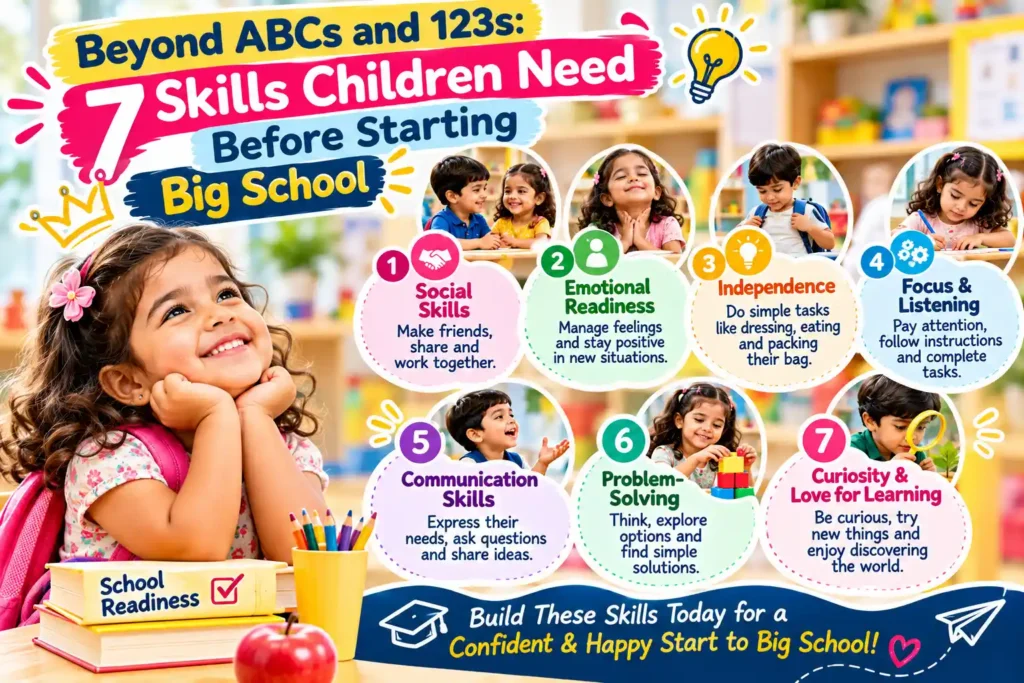
Ask a Year 1 teacher what makes a child ready for school and you may be surprised by the answer. Reciting the alphabet and counting to twenty are nice to have, but they rarely top the list. Teachers tend to talk about children who can listen, cope with disappointment, ask for help, and manage a packed lunch. These are the quieter skills that decide whether the first term feels exciting or overwhelming, and nursery is where most of them take root.
Here are seven skills worth building before your child walks through the big school gates.
1. Self-Care and Independence
In a classroom of twenty or more children, a teacher can’t help every child with every zip. Children who can use the toilet independently, wash their hands, put on a coat, open a lunchbox, and look after their belongings settle in faster and feel proud of themselves. The American Academy of Pediatrics describes growing self-help skills as a normal and important part of preschool development.
Build it by: letting your child try tasks alone, even when it takes longer, and choosing clothes and shoes they can manage themselves. A nursery in Dubai that gives children daily responsibilities, such as tidying up and serving snacks, makes this practice a natural habit.
2. Listening and Following Instructions
Big school runs on routines: sit on the carpet, line up, open your book. Children who can listen to a two- or three-step instruction and act on it manage the day with far less stress. This skill grows through stories, songs, and games like “Simon Says.” Zero to Three offers helpful guidance on supporting language and listening in the early years.
Build it by: giving short, clear instructions at home and asking your child to repeat them back.
3. Communication and Confidence in Speaking
Being able to say “I need help,” “I feel sad,” or “That’s mine” matters as much as knowing letters. Children who can express needs and ideas are more likely to join in and less likely to become frustrated. The Harvard Center on the Developing Child explains how everyday back-and-forth conversation builds the brain’s language pathways.
Build it by: chatting through your day, asking open questions, and giving your child time to answer.
4. Managing Big Feelings
Starting big school means new rules, new faces, and sometimes tough days. Children who can name their feelings and use simple strategies, such as taking a deep breath or asking an adult for a cuddle, cope far better. The Child Mind Institute shares practical advice on helping children handle emotions. A best nursery in Dubai will help children practise this daily, through calm routines, kind modelling, and talking through upsets.
Build it by: naming feelings out loud and staying calm during meltdowns.
5. Getting Along With Others
Sharing, waiting, taking turns, and solving small disagreements are everyday school skills. Group play at nursery is the training ground. The National Association for the Education of Young Children highlights how play with peers builds the social skills children need in classrooms.
Build it by: arranging playdates and encouraging teamwork games rather than constant competition.
6. Focus and Staying With a Task
Being able to sit and finish a puzzle, listen to a whole story, or complete a drawing is a major step toward formal learning. Attention grows gradually, so start small. The CDC provides useful milestone information to help parents understand what to expect at each age.
Build it by: reading together daily and offering activities that hold your child’s interest for a few minutes, then slowly stretching the time.
7. Hand Strength and Physical Confidence
Holding a pencil, using scissors, and sitting upright to write require strong small muscles and good body control. Outdoor play, climbing, playdough, and threading beads all help. The World Health Organization recommends regular physical activity for young children, and these early movement skills feed directly into handwriting.
Build it by: offering plenty of active play and fine motor activities like drawing, cutting, and building.
What About Letters and Numbers?
They still matter, of course. But children who can recognise a few letters and count objects are best supported when those skills grow out of play, stories, and daily life rather than drills. The UK’s Early Years Foundation Stage places personal, social, and emotional development alongside literacy and maths as core areas of learning. You can see how a range of skills is developed together in CircleTime’s curriculum.
How to Check a Nursery Is Building These Skills
In Dubai, the Knowledge and Human Development Authority (KHDA) publishes information on early years providers, which can help you compare options. The OECD and UNICEF both highlight the lasting value of good early education, and Edutopia offers classroom-tested ideas for supporting children’s development.
When visiting a nursery in Dubai, look for children who are busy and relaxed, teachers who encourage independence, and a balance of play, stories, and outdoor time. Ask how the nursery prepares children for the move to school and how it communicates with parents.
Final Thoughts
School readiness is about the whole child, not just the alphabet. Independence, listening, communication, emotional control, friendship skills, focus, and physical confidence give children a sturdy base for everything that follows. Choosing a best nursery in Dubai that nurtures all seven gives your child the best chance of walking into big school with a smile. To find out how the nursery supports the transition, reach out through the nursery’s contact page.