
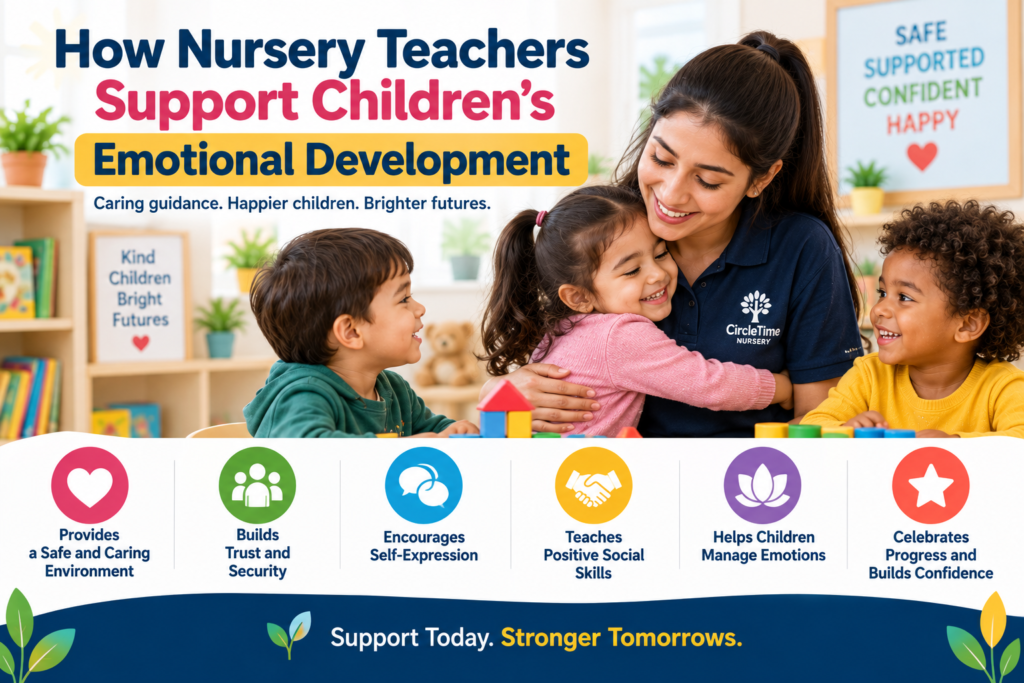
Emotional development in early childhood doesn’t happen through a single lesson or milestone; it’s built through hundreds of small, guided moments over months and years. Nursery teachers play a far bigger role in supporting emotional development in early childhood than most parents realize, often doing the quiet groundwork behind a child’s growing ability to manage feelings, form friendships, and feel secure in a group setting.
Why Emotional Development in Early Childhood Matters So Much
The first five years are a critical window for emotional development in early childhood, shaping how a child later manages frustration, forms relationships, and copes with change. Children who receive consistent emotional support at this stage tend to show stronger self-regulation and social confidence well into their school years, which is why early emotional development in early childhood is treated as seriously as academic readiness in strong early years programs.
How Nursery Teachers Actively Support This
1. Naming Emotions in the Moment
Trained teachers regularly narrate feelings as they happen: “I can see you’re frustrated because the tower fell.” This simple habit helps children connect emotions to words, a skill central to emotional development in early childhood that takes years to build naturally without guidance.
2. Modeling Calm Responses
Children learn regulation largely by watching adults, not by being told to “calm down.” A teacher who stays composed during a tantrum or conflict is quietly teaching one of the most important lessons in social emotional learning: that big feelings can be managed without losing control.
3. Building Consistent, Predictable Routines
Predictability reduces anxiety. When children know what comes next in their day, they experience fewer emotional surprises, which supports steadier emotional development in early childhood than an unpredictable schedule ever could.
4. Gentle, Guided Conflict Resolution
Rather than solving disputes for children, effective teachers guide them through it: encouraging words over grabbing, and calm discussion over frustration. This hands-on practice is where much of social emotional learning actually happens, not in a formal lesson but in the small disagreements of daily play.
5. Individual Attention and Observation
Noticing when a normally cheerful child seems withdrawn, or when a shy child is ready for a gentle nudge toward a group activity, requires close, consistent observation. This individualized attentiveness is a core part of how strong emotional development in early childhood actually gets supported day to day.
Emotional Security Before Formal Learning
Many respected early years philosophies prioritize emotional security ahead of academic instruction, on the understanding that a child who feels safe is far more ready to explore, engage, and genuinely learn. At CircleTime, this shows up directly in the “Hug First, Then Teach” approach, where reassurance and emotional connection come before any structured activity begins. You can see how this is reflected across the curriculum structure, which builds social emotional learning into daily routines rather than treating it as separate from academic content.
Signs a Nursery Supports Emotional Development Well
A nursery genuinely invested in emotional development in early childhood usually shows it through a few consistent patterns:
- Teachers consistently name and validate emotions rather than dismissing them
- Predictable daily routines with minimal unexplained disruption
- Calm, patient responses to tears, frustration, or conflict
- Individual attention to quieter, more anxious, or newly enrolled children
- Visible focus on social emotional learning alongside academic activities
Questions to Ask When Comparing Nurseries
- How do teachers respond when a child is upset or having a difficult moment?
- Is emotional development in early childhood built into daily planning, or treated informally?
- How much individual attention does each child receive during a typical day?
- What does the settling-in period look like for children who need extra emotional support?
Frequently Asked Questions
1) At what age is emotional development most rapid?
The first five years see the fastest growth in emotional development in early childhood, making consistent, high-quality nursery support particularly valuable during this window.
2) Can parents support this at home too?
Yes. Naming feelings, staying calm during a child’s meltdown, and maintaining predictable routines at home reinforce exactly what strong social emotional learning looks like at nursery.
3) Is emotional development as important as academic skills at this age?
Most early years experts consider it foundational. Strong emotional development in early childhood makes children more ready to engage with academic content once it’s introduced, rather than competing with it for attention.
4) How can I tell if a nursery genuinely prioritizes this, not just claims to?
Ask specific questions about how staff handle real situations, tears, conflict, shyness, rather than general statements about “caring” environments. Specific, confident answers are usually a good sign.
Final Thoughts
Emotional development in early childhood is built through consistent, everyday moments guided by attentive, trained teachers, not a single program feature or slogan. When comparing nurseries, look for evidence of genuine social emotional learning woven into daily routines, not just claimed in marketing material. If you’d like to see how this looks in practice, CircleTime’s team can walk you through how emotional support is built into a typical day for your child’s specific age group.